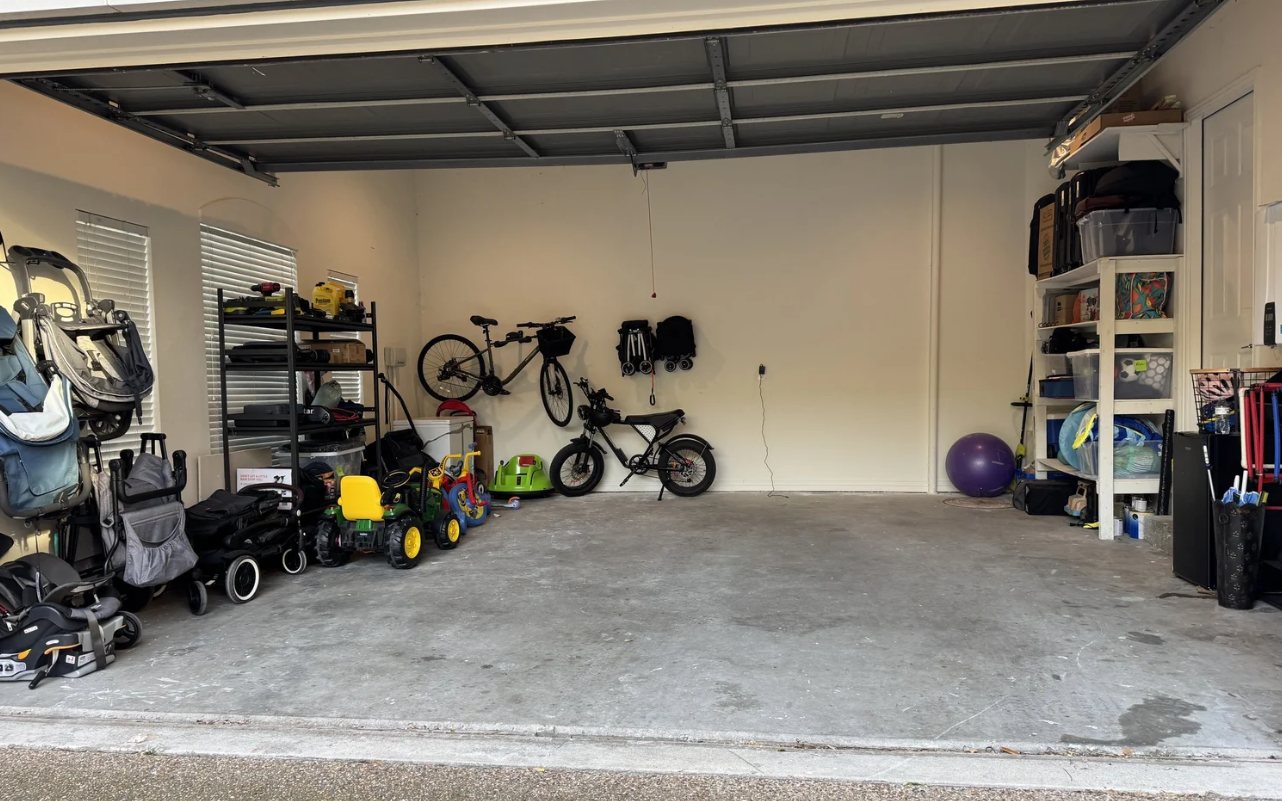
A Dallas-Fort Worth garage can easily run hotter than the air outside during July and August. That heat does more than make the garage uncomfortable. It warps cardboard, ruins certain items, and makes clutter harder to deal with, because nobody wants to spend a Saturday sorting boxes in a hot garage.
The good news is that a few smart choices make a big difference. Here's how to set up a garage that holds up through a Texas summer.
Know what shouldn't live in the garage
Some things simply don't belong in a space that gets this hot. Moving them indoors frees up room and protects things you'd hate to lose:
- Photos, keepsakes, and important papers. Heat and humidity can curl, fade, and stick them together.
- Candles, crayons, and anything made of wax. They'll soften or melt.
- Electronics and batteries. High heat shortens battery life and can damage devices.
- Paint. Extreme temperature swings can ruin it before you get around to touch-ups.
- Canned food and pantry overflow. Heat degrades food quality faster.
- Wine and anything temperature-sensitive.
Always check the label on chemicals, fuels, and pool supplies. Many have specific temperature storage guidance, and following it is a safety issue, not just an organization one.
Swap cardboard for sealed plastic bins
Cardboard is the enemy of an organized Texas garage. It absorbs moisture, sags under heat, and invites pests. Clear, lidded plastic bins solve all three problems, and being able to see what's inside means you stop buying duplicates of things you already own.
Label every bin on the end that faces out, not just the lid. Once bins are stacked on a shelf, the lid is the one part you can't see.
Get things off the floor
A garage floor covered in stuff is harder to clean, collects dust and debris, and makes it easy for pests to hide. Sturdy shelving, wall-mounted hooks for bikes and yard tools, and overhead racks for seasonal items open up the floor, which is usually the fastest way to make a garage feel twice as big.
Organize in zones
Group items by how you use them rather than where they happened to land. Common zones include:
- Lawn and garden, closest to the garage door
- Sports and outdoor gear
- Tools and projects
- Seasonal and holiday storage, up high since you rarely need it
- Everyday items like the recycling and pet supplies, closest to the house door
Zones make it obvious where things go back, which is what keeps a garage organized long after the big clean-out.
Do the big work in the cooler months
If you're planning a full garage clean-out on your own, fall and early spring are the most comfortable times in North Texas. Save summer for small maintenance, like a quick monthly reset to put things back in their zones.
When to call in help
If your garage has reached the point where you're avoiding it, that's normal, and it's exactly what we do. Our team sorts everything with you, hauls away what's leaving, and sets up a system built around how your family actually uses the space.